





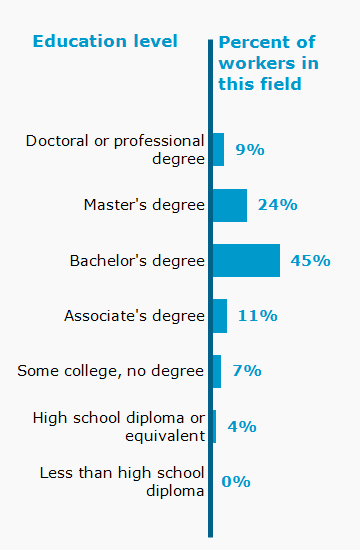
Most biomedical engineers will go in with a bachelor's in Biomedical Engineering, Biomolecular Engineering, or a similar degree, though others will get a bachelor's in another engineering field or in something like Biochemistry or Biomedical Science, and then get a master's in Biomedical Engineering.
A skill certification designed for students in engineering courses and robotics clubs. Requires passage of the Fundamentals of Engineering exam and two of eight offered engineering modules. Not required for many professions in the presence of other education, but shows foundational engineering knowledge and helps one stand out in initial searches for STEM careers. No renewal is involved.
A very common entry-level certification, with a prerequisite of as associate's in a technology-based program, or equivalent experience. Tests on fundamentals of anatomy, electronics, and specifically on healthcare technology. Entails a 165-question exam. More information can be found here.
The foundational test for ETA's electronics certification pathways, encompassing basic electronics theory and application. Designed for technicians with less than 2 years experience. Entails an 100-question exam, which can be taken simultaneously with one of ETA's journeyman-level certs. More info can be found here.
A certification on the "journeyman" level of ETA's categorization, for knowledge of modern biomedical techniques, procedures, and proper handling and maintenance of biomedical equipment. Entails a 75-question certification exam, and renewal every 4 years via Continuing Educational Units. More information can be found here.
A journeyman-level or standalone certificate for knowledge of anatomy, medical terminology, and computer and electromechanical knowledge as it relates to medical imaging equipment, testing equipment, radiographic equipment, and the like. Entails a 100-question certification exam, with renewal every 4 years. More info can be found here.
When in the field, there are quite a few mid-career certifications one may want, such as the CCE and CMDA, which require renewal every few years- these designed to ensure continuous improvement of healthcare. The majority of bioengineering certifications seem to be in this category.
